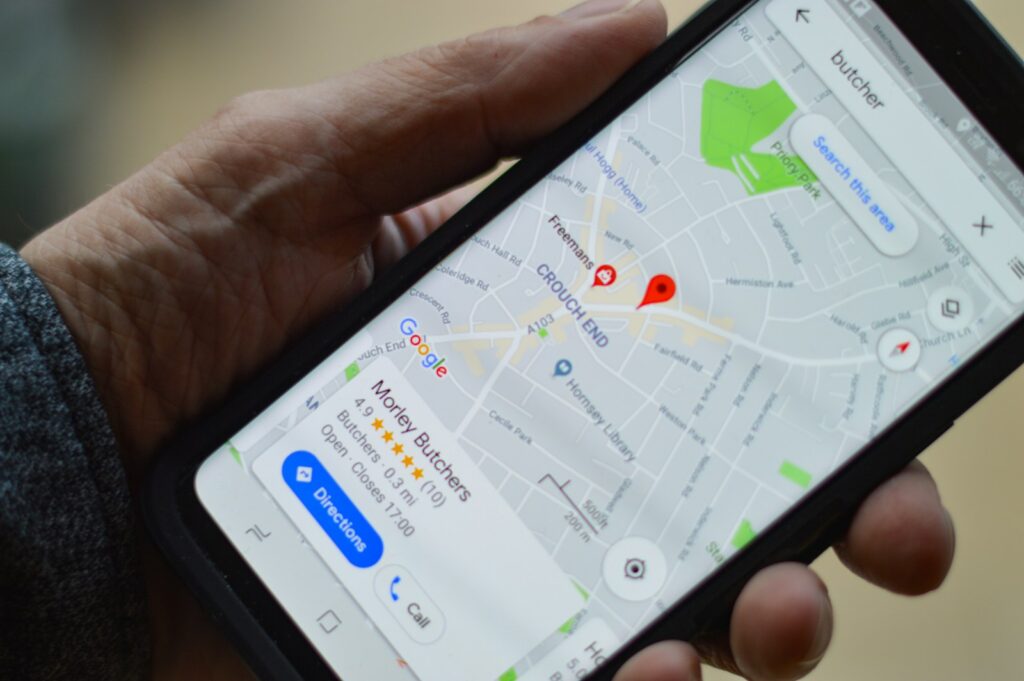
Zero-click search means a Google result that answers the question directly on the results page, with no click to any website at all — and it now happens on 64.82% of all searches, up from 50% in 2019, which means ranking #1 no longer guarantees the traffic it used to.
AI Overviews Made a Bad Situation Worse
Searches that trigger an AI Overview show an 83% zero-click rate, versus roughly 60% for traditional queries without one.
AI Overviews now trigger on roughly 48% of tracked queries, a 58% jump year-over-year, and position-one CTR on those queries falls from 31.7% to 19.8% once an Overview appears. Here’s the uncomfortable part: ranking first used to mean the click was basically guaranteed. Now it means competing with Google’s own answer for the click — and often losing.
There’s Still a Way to Win This
Pages cited as the source inside an AI Overview see 35% more organic clicks and 91% more paid clicks than uncited competitors ranking for the same query. That’s not a small consolation prize — it’s a bigger prize than the old #1 spot used to offer. The shift isn’t “SEO is dying,” it’s “the target moved from ranking #1 to being the cited source,” and those two goals reward mostly the same underlying work: clear, specific, well-sourced content that directly answers the question being asked.
Try It: Is Your Content Type at Risk?
High risk. Definitional and factual queries are exactly what AI Overviews answer best — expect click-through to keep declining here regardless of ranking position.
Moderate risk. AI Overviews increasingly attempt comparisons, but genuine purchase research often still prompts a click to verify specifics before committing — this zone is shifting but not fully absorbed yet.
Low risk. Google’s summary can’t complete a purchase or booking — these queries retain much closer to historical click-through behavior.
Interactive tool: informational explainer queries face high zero-click risk, comparison queries face moderate risk, and transactional buy or booking queries face the lowest risk since AI summaries cannot complete the actual transaction.
What Actually Still Gets Clicked
Transactional and commercial-intent queries — “buy,” “price,” “near me,” “book” — hold up better against zero-click behavior than pure informational queries, because Google’s own summary can’t complete a purchase or a booking for the searcher. If your content sits mostly in the informational bucket, the AI Overview risk is real. If it sits in commercial intent, the threat is smaller than the headlines suggest.
Why the Swiss Market Feels This Differently
Zero-click statistics get reported at a global, mostly English-language, mostly US-search-behavior level, and that global average doesn’t map cleanly onto Switzerland’s multilingual, higher-trust, more research-heavy search culture. AI Overviews rolled out to German, French, and Italian-language queries later and less completely than to English ones, which means Swiss businesses targeting local-language keywords are currently seeing a smaller zero-click hit than the headline 64.82% figure suggests — a gap that’s closing but hasn’t closed yet. That’s not a reason for complacency; it’s a narrow window. Businesses that use this lag to build the answer-first, well-cited content structure now will already be positioned correctly when AI Overview coverage catches up to German and French queries at the rate it’s already reached English ones. Businesses that wait until the Swiss numbers match the global numbers will be doing the same restructuring work later, under more competitive pressure, with less runway to test what works.
The Content Restructuring This Actually Requires
Winning AI Overview citation isn’t the same skill as winning a traditional #1 ranking, even though the two overlap significantly. Traditional SEO rewarded comprehensive coverage of a topic — the longer, more thorough page often won. AI Overview citation rewards a different structure: a clear, extractable, directly-quotable answer near the top of the page, followed by supporting depth for the reader who does click through. A page that buries its actual answer under three paragraphs of preamble is much harder for an AI system to confidently extract and cite than one that states the answer plainly in the first sentence, even if the buried version is otherwise more thorough. We’d call this “answer-first” structuring, and it’s a genuinely different writing discipline than the SEO conventions many content teams have practiced for a decade.
A Practical Framework for Auditing Existing Content
| Signal to check | Why it matters for AI citation |
|---|---|
| Does the first 40-60 words directly answer the likely query? | AI systems extract from the clearest, most direct answer span on the page |
| Are claims backed by a specific, citable source? | AI systems favor content it can attribute confidently to a credible source |
| Is the content structured with clear headings matching likely sub-questions? | Structured content is easier to parse and extract from than dense unbroken prose |
| Does the page demonstrate first-hand expertise, not just aggregated facts? | Distinguishes citable, trustworthy sources from generic content in a crowded field |
One source of citable material worth naming explicitly: genuine discussion on community platforms like Reddit now feeds directly into a large share of AI Overview and Perplexity answers, sometimes more heavily than brand-published pages do. Whether social media helps SEO is a question that increasingly overlaps with the AI-citation question covered here, rather than sitting in a separate bucket.
Why Some Businesses Are Overreacting to This Shift
We’ve seen a real overcorrection in parts of the SEO industry — treating zero-click search as an existential threat that justifies abandoning organic content investment entirely in favor of paid channels. That reaction misreads the data. The traffic that disappears to zero-click behavior was disproportionately low-intent, informational traffic that rarely converted well to begin with; a visitor who just wanted a quick definition was never your best lead. The traffic that remains — genuine commercial and transactional intent, plus the AI-citation traffic that does click through — tends to be higher-intent than the aggregate numbers suggest. Total traffic volume declining while lead quality holds steady or improves is a very different story than the “SEO is dead” framing implies, and it’s the more accurate one for most businesses we’ve actually measured this against.
A Worked Example: Rewriting One Paragraph for Citability
Take a common query pattern for a Swiss service business: “how much does SEO cost in Switzerland.” A traditional SEO paragraph, written for a human reader scrolling a blog, often opens with throat-clearing — “SEO pricing is a common question we get, and the answer depends on many factors” — before eventually stating a number three sentences later. That structure is invisible to an AI system scanning for an extractable answer. The same information, restructured for citability, opens with the number: “SEO services in Switzerland typically cost between CHF 800 and CHF 3,500 per month, depending on scope and market competitiveness.” Everything after that sentence — the “it depends on,” the caveats, the nuance a genuine expert would add — still belongs on the page. It just comes after the answer, not before it. We rewrote a batch of client pages this way in early 2026 and saw AI Overview citation appear within weeks for queries that previously produced zero citation, without any change to backlinks or domain authority. The lesson generalizes: the sentence structure matters as much as the underlying fact.
Measuring What Actually Matters Now
Standard analytics dashboards weren’t built for a zero-click world, and most teams are still measuring the wrong things by default. Total organic sessions, tracked in isolation, will trend down for any site that used to rank well for informational queries — that decline is now structural, not a sign of failing SEO. The more useful metrics sit one layer deeper: impressions for queries where you’re the likely AI Overview source (visible in Google Search Console even without a click), branded search volume over time (a reasonable proxy for the awareness AI citation drives even without a click-through), and conversion rate among the traffic that does arrive, which should hold steady or improve if the traffic mix is shifting toward higher intent. A site owner who only watches the top-line sessions number will conclude, wrongly, that their SEO investment stopped working, when the more accurate read is that the measurement stopped matching the mechanism.
Common Mistakes When Businesses Try to Adapt
The most common mistake we see is treating “answer-first” as a license to strip out all nuance and depth, producing thin, listicle-style content that states a fact and stops. That’s a misreading of what’s actually being rewarded. AI Overviews and traditional rankings both still favor pages that go deeper than the competition — the answer-first principle changes where the direct answer sits on the page, not how much substance follows it. A page that leads with a clear answer and then backs it up with methodology, caveats, examples, and evidence outperforms both the old rambling-intro version and the new stripped-down version, because it satisfies the AI system’s extraction needs and the engaged reader’s depth needs at the same time.
A second mistake is chasing AI Overview citation as a standalone goal disconnected from actual conversion. We’ve seen businesses celebrate an AI Overview citation that drove zero incremental revenue, because the underlying page was never built to convert the visitor who did click through — it was optimized purely to be extractable. Citation without a coherent path to the next action a business needs (a call, a form fill, a booking) is a vanity metric dressed up as a strategy win. The correct sequencing is: build the page to genuinely serve the reader and convert them, then apply answer-first structuring on top of that foundation — not the reverse.
A third mistake is assuming this is purely a content-writing problem and ignoring the technical layer. AI systems still need to crawl and parse a page before they can extract from it — pages hidden behind heavy client-side rendering, blocked by an overly aggressive robots.txt rule, or structured with markup that obscures rather than clarifies the answer will underperform regardless of how well the prose itself is written. Answer-first content on a technically inaccessible page gets no citation credit at all.
Where This Is Heading
The zero-click share of search has moved in one direction for years, and nothing about the underlying incentive suggests it reverses. Google keeps more attention on its own results pages because that’s where its advertising business lives; every point of zero-click adoption is also a point of ad-inventory-on-SERP adoption. Businesses that treat this as a temporary disruption to wait out are making a planning error — the more useful posture is to accept it as the new baseline and build a measurement and content strategy around being the cited, trusted answer rather than the clicked link. That’s a smaller behavioral shift than it sounds: the content quality bar for AI citation and the content quality bar for genuinely helping a reader are, in our experience, almost the same bar. The businesses struggling with this transition are disproportionately the ones that were relying on thin, unstructured content to rank in the old system — a system that’s now actively being replaced by one that rewards exactly the depth and clarity that thin content lacked.
Related Guides
- whether alternative search engines still matter — how much traffic non-Google search engines realistically bring in.
- the Core Web Vitals threshold change nobody noticed — a 2026 scoring change that quietly affected technical SEO baselines.
- what the metaverse SEO hype cycle actually taught us — a cautionary look at chasing a trend with no real search behavior behind it.
- why search rankings feel like they never stop moving — what’s driving today’s elevated baseline of ranking volatility.
Frequently Asked Questions
Is SEO still worth it if most searches are zero-click?
Yes — being the cited source inside an AI Overview drives 35% more organic clicks than not being cited, which is a bigger prize than the traditional #1 ranking used to offer.
Which content types are most at risk from zero-click search?
Purely informational content is hit hardest. Commercial and transactional intent — pricing, booking, “near me” — holds up better since Google’s summary can’t complete the action itself.
How do I know if my page is being cited in an AI Overview?
Google Search Console doesn’t yet break out AI Overview citations as a distinct metric, but a rising “impressions without clicks” pattern on queries you rank for, paired with manual spot-checks of the actual SERP for your target queries, is currently the most reliable way to confirm citation without dedicated tooling.
Does restructuring content for AI Overviews hurt traditional rankings?
No — answer-first structuring, clear headings, and strong sourcing are core traditional ranking factors as well. We haven’t seen a case where this restructuring cost a page its existing ranking; the two goals are aligned far more often than they conflict.
Should Swiss businesses wait until AI Overviews fully roll out to German and French queries before restructuring content?
No — waiting only shrinks the window to test and refine an answer-first structure before the competitive pressure catches up. The businesses that restructure now, while the Swiss zero-click numbers still lag the global average, get to work out what actually earns citation before every competitor is racing to do the same thing at once.
Want your content structured to win AI Overview citations, not just rankings? See our pricing.