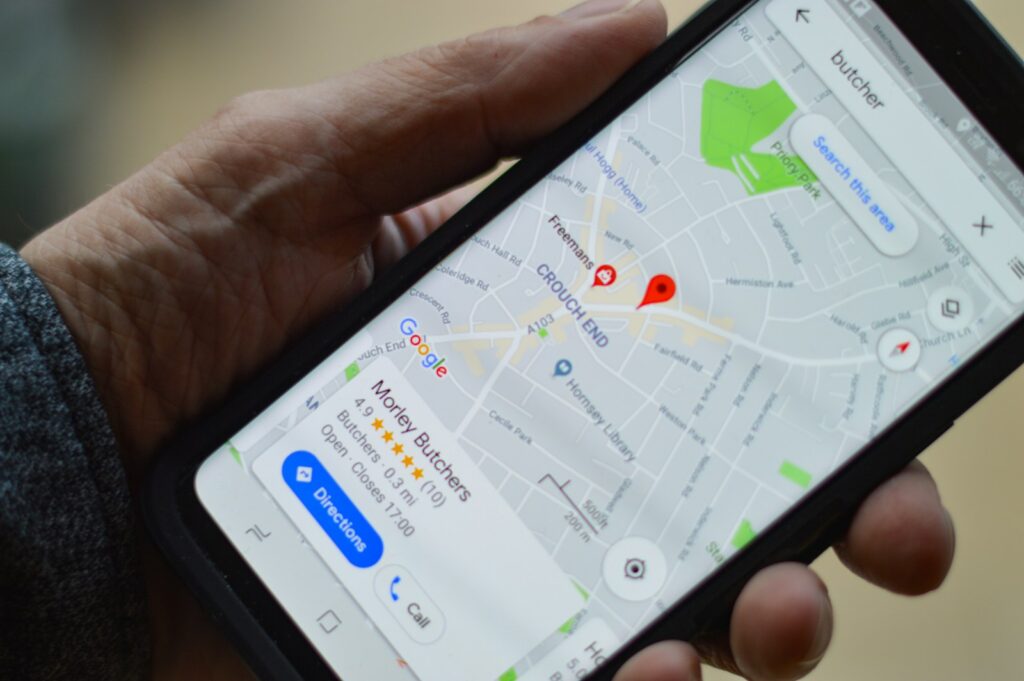
Digital marketing for a small business on a genuinely limited budget should start with three free-or-cheap moves in this order: claim and fully complete your Google Business Profile, publish one well-written page answering your single most common customer question, and ask five recent happy customers for a review this week. None of these cost meaningful money. All three move faster than most owners expect, because they’re addressing the specific gaps that make small businesses invisible in the first place — not because they’re secret tactics agencies withhold.
What makes this list worth taking seriously rather than dismissing as generic advice is that we consistently see it work precisely because most small business owners never actually finish it. It’s easy to start a Google Business Profile and leave the category slightly wrong, or publish one blog post and never follow up, or mean to ask for reviews and let the moment pass because it feels awkward in person. The gap between “knowing” these three things and actually completing all three, consistently, over a few months, is where most of the available competitive advantage at this budget size genuinely sits — not in some more sophisticated tactic waiting to be discovered.
Try It: Build a Realistic $500/Month Plan
For a shop or local service, Google Business Profile and local trust signals do more work per dollar than almost anything else at this budget size.
Without a physical location, local signals matter less. Paid social and email retention carry more weight relative to organic at this budget level, since organic takes longer to compound.
B2B decision-makers research thoroughly before buying — content that demonstrates expertise plus targeted LinkedIn outreach outperforms broad-reach channels at this budget size.
Interactive budget tool: local storefronts should weight roughly 50% Google Business Profile and local content, 30% reviews and citations, 20% local PPC. Online-only product businesses should weight 35% content, 40% paid social, 25% email tools. Small B2B consultancies should weight 45% content and LinkedIn, 35% LinkedIn ads, 20% tools and CRM.
The Free Tier: What Costs Nothing But Time
Google Business Profile setup and optimization is entirely free and, for local businesses specifically, the single highest-leverage thing available at zero cost — a complete, accurately-categorized profile with regular photo updates and prompt review responses competes directly with businesses spending real money on ads, purely because most competitors half-finish this step and never revisit it. Basic on-page SEO — descriptive page titles, a genuinely useful FAQ section, alt text on images — costs only the time to do it properly. And asking for reviews directly, in person or via a simple text message after a purchase, converts at a far higher rate than a passive “leave us a review” link buried in an email footer that nobody reads.
The Cheap Tier: Under CHF 200 a Month
A modest content cadence — one genuinely useful blog post a month, answering a real question customers actually ask rather than a generic industry topic — starts compounding within a few months even without paid promotion behind it. A basic email tool (most have a free tier up to a few hundred subscribers) turns one-time customers into repeat ones for a fraction of what new-customer acquisition costs. And a small, tightly-targeted local PPC campaign — a few francs a day aimed only at your specific service area and specific services, not broad match on generic terms — can generate a trickle of qualified leads while the free-tier work compounds in the background. Once this tier stops being enough, our guide to what SEO actually costs in Switzerland lays out realistic next-tier budgets by business type.
Where Small Businesses Waste Their Limited Budget
| Common spend | Why it usually underperforms at this budget size |
|---|---|
| Broad-match PPC on generic industry terms | Burns budget fast on unqualified clicks with no geographic or intent filtering |
| A full-service agency retainer before there’s traffic to optimize | Pays for strategy work when the actual gap is content and profile basics you can do yourself first |
| Paid social boosting with no clear offer or landing page | Generates impressions and vanity engagement, rarely leads, without a specific next step for the viewer |
| A brand-new website redesign | Rarely the actual bottleneck — most small business sites lose customers to missing content and slow pages, not outdated design |
The Discipline That Matters More Than the Tactic
We’d argue consistency matters more than any single tactic choice at this budget level. A single blog post published monthly for a year outperforms four posts published in one enthusiastic week followed by eleven months of silence — not because the content itself differs, but because search engines and readers both reward an active, ongoing presence over a burst-then-abandon pattern. The businesses that struggle most at this budget size aren’t the ones with the smallest budgets; they’re the ones that start strong and quietly stop within two months once the immediate excitement fades and no rankings have moved yet, which is exactly the point where the compounding effect is about to start becoming visible.
The Tools Worth Paying For, and the Ones That Aren’t Yet
At this budget level, a paid rank-tracking tool or an enterprise SEO platform is money better spent elsewhere — free alternatives (Google Search Console for technical and ranking data, Google Analytics for traffic) cover the fundamentals a small business actually needs to act on. Where paying does make sense: a proper email marketing platform once your list crosses a few hundred subscribers and the free tier’s limitations start actively costing you functionality, and a scheduling or review-request automation tool if the manual process of asking every customer individually is genuinely not happening consistently without it. The pattern we’d flag: pay for tools that remove a specific bottleneck you’ve already hit, not tools that promise capability you don’t have the traffic or team to use yet. A CHF 150-a-month analytics suite is wasted on a business getting 200 monthly visitors — that traffic level doesn’t need enterprise segmentation, it needs more traffic.
A Realistic Example: A Small Zürich Bakery
Take a hypothetical case close to the “local storefront” scenario in the tool above: a family bakery with a CHF 300 monthly marketing budget and zero existing online presence beyond an outdated Facebook page. Month one: claim and fully build out the Google Business Profile, photograph the actual products properly (phone photography in good natural light, not stock images), and start asking every satisfied customer for a review before they leave. Month two: publish one page answering the question the owner gets asked constantly in person — “do you have gluten-free options,” say — since that’s exactly the kind of specific, answerable query a “near me” searcher types in. Month three: a small, geographically narrow PPC test, perhaps CHF 5 a day, targeting only the immediate neighborhood and only around specific search terms like “bakery near me” or the bakery’s specific specialty.
None of this requires marketing expertise the owner doesn’t already have — it requires roughly three to four hours a week of consistent, unglamorous effort. The honest expectation: modest, steady improvement in foot traffic over three to six months, not a dramatic single-month transformation. Businesses that expect the dramatic version tend to abandon the steady version before it has time to work.
It’s worth being specific about what “modest, steady improvement” actually looks like month by month, because vague reassurance is exactly what makes owners give up early. Month one typically shows no visible traffic change at all — the Google Business Profile improvements take a few weeks to be reflected in local search rankings, and the first content page hasn’t accumulated any authority yet. Month two or three is usually when the first genuine signal appears: a handful of new customers mentioning they found the bakery “on Google,” or a visible uptick in profile views in the free insights dashboard. Month four through six is typically when the pattern becomes reliable enough to trust — consistent week-over-week growth in profile views and a steady trickle of new customers citing the same search-driven discovery path. A bakery owner checking daily for dramatic movement in the first three weeks is looking at the wrong timescale entirely for what this kind of investment actually produces.
When to Graduate From DIY to Paid Help
The honest signal isn’t a specific revenue number — it’s when the owner’s own time doing marketing tasks starts costing more in opportunity cost than hiring it out would. If claiming three hours a week for content and profile management is meaningfully limiting the owner’s capacity to serve paying customers, that’s the point to consider outside help, even on a modest retainer, rather than continuing DIY out of habit once it’s actively constraining the business elsewhere. If you’re at that point and weighing what a legitimate agency relationship should cost and include, that’s covered in our guide to choosing an SEO agency.
A Realistic 90-Day Starting Sequence
- Week 1-2: Complete and verify Google Business Profile — correct category, hours, photos, service area.
- Week 3-4: Publish the first genuinely useful content page, answering your single most common customer question in real depth.
- Month 2: Start a review-request habit — ask every satisfied customer directly, don’t wait for them to volunteer one.
- Month 2-3: Set up a basic email capture and a simple monthly newsletter to past customers.
- Month 3: If budget allows, test a small, tightly-targeted local PPC campaign — a few francs a day, narrow targeting, measured honestly against actual leads, not clicks.
A Common Assumption Worth Correcting: More Channels Isn’t More Marketing
A recurring mistake at this budget level is spreading a limited CHF 300-500 monthly budget thin across five or six channels at once — a little Instagram, a little Google Ads, a little email, a little print flyer — on the theory that more visible activity means more marketing effort and therefore more results. In practice, this almost always underperforms concentrating the same total budget on the two or three channels the budget tool above actually recommends for your business type. A tiny amount of spend spread across many channels rarely reaches the minimum threshold any single channel needs to produce a measurable result — a CHF 50 Instagram boost and a CHF 50 Google Ads test both individually sit below the volume needed to learn anything useful or generate a meaningful lead, while the same CHF 100 concentrated on one channel might actually clear that threshold.
The psychological pull toward spreading thin is understandable — it feels like diversification, and diversification feels safer than concentration. But marketing channels at this budget size don’t behave like an investment portfolio; each one has a minimum effective dose below which it simply doesn’t work well, and going wide guarantees staying under that threshold everywhere rather than clearing it anywhere.
Measuring Results Without Expensive Analytics Tools
A small business doesn’t need sophisticated attribution modeling to know whether this is working — it needs three simple, free habits tracked consistently. First, ask every new customer directly how they found you, and actually log the answer somewhere, even a simple spreadsheet; this single habit reveals more about channel performance than most paid analytics tools will at this traffic volume. Second, check Google Business Profile’s built-in insights monthly for search views, direction requests, and calls — free data most owners never open. Third, track review count and average rating over time as a leading indicator, since review growth typically precedes visible ranking and traffic improvement by a month or two. None of this requires a dashboard subscription; it requires a habit of actually looking at the free data already being collected, which is a discipline problem, not a tooling problem.
Related Guides
- how the digital marketing pieces actually fit together — a beginner-level map of how SEO, PPC, and content connect.
- hiring a contractor versus an agency — what actually changes in practice between the two models.
Frequently Asked Questions
What’s the single highest-impact free action for a local business?
Fully completing and regularly updating your Google Business Profile — accurate category, current hours, fresh photos, and prompt review responses.
Is a website redesign a good use of a limited marketing budget?
Rarely as a first move — most small business sites lose customers to missing content and slow pages, not outdated visual design. Fix content and speed before considering a redesign.
When should a small business move from DIY to a paid agency?
When the owner’s own time spent on marketing tasks starts meaningfully limiting their capacity to serve paying customers — that opportunity cost, not a specific revenue milestone, is the real signal.
Should a limited budget be spread across several marketing channels?
Generally no — most channels have a minimum effective spend below which they barely work. Concentrating a small budget on two or three channels that fit your business type usually outperforms spreading it thin across five or six.
How can a small business track marketing results without paying for analytics tools?
Ask every new customer directly how they found you and log the answer, check Google Business Profile’s free built-in insights monthly, and track review count and rating over time as a leading indicator.
Ready to move past DIY once the free and low-cost basics are genuinely handled and you’re weighing what a legitimate next-stage investment should look like? See our pricing.