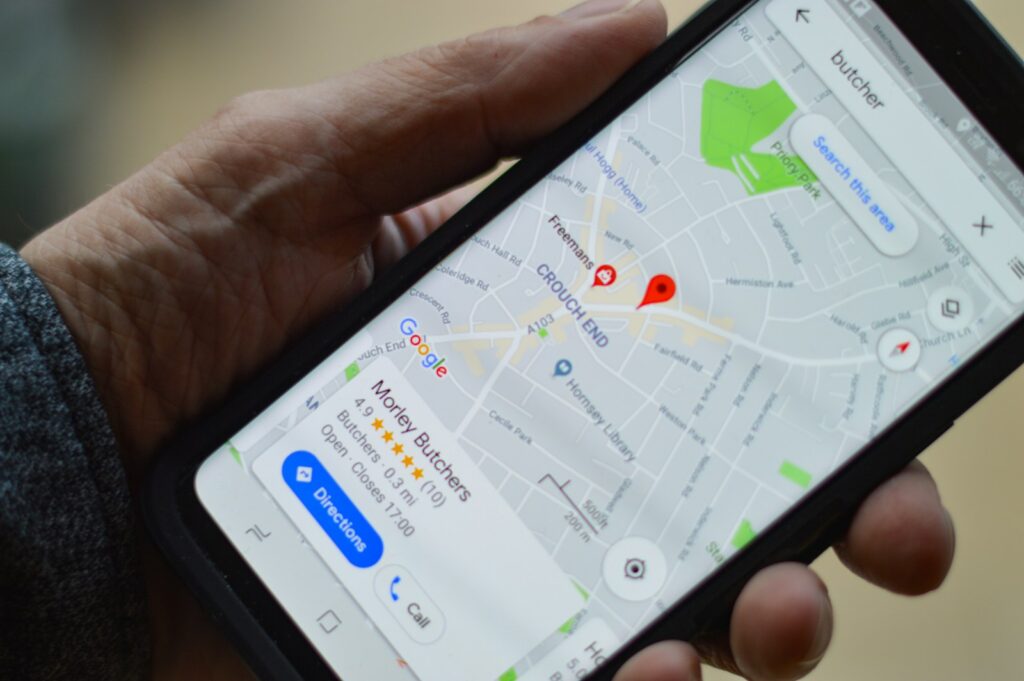
Dental SEO works because 113,000 people search “dentist near me” every single day, 78% of those local dental searches convert to a booked appointment within 24 hours, and the local pack — the three-listing map block above standard results — captures 68% of the clicks on that search. That’s an unusually fast, unusually concentrated conversion path compared to almost any other local service category, which is exactly why the practices that get the technical and profile basics right pull dramatically ahead of the ones that don’t, often within the same competitive radius and offering near-identical services.
Try It: Where Does Your Practice’s Budget Actually Go Furthest?
Priority: Google Business Profile + review velocity. With no online history, GBP completeness and a fast-growing, recent review base do more to establish local pack visibility than content alone can in the first 6 months.
Priority: Service-specific content depth. An established practice with a solid profile already competes on content — deep pages for each high-value service (implants, cosmetic work) outperform a single generic “our services” page.
Priority: Content that captures wider-radius searches. Specialty patients travel farther than general dentistry patients — content needs to compete regionally, not just hyper-locally, since proximity matters less when the patient is willing to drive for a specific procedure.
Interactive tool: new practices should prioritize Google Business Profile completeness and review velocity; established practices should prioritize deep service-specific content; specialty practices should prioritize content that competes across a wider geographic radius.
The Numbers That Explain Why This Category Moves So Fast
113,000 daily searches for “dentist near me,” 78% of local dental searches convert to a booked appointment within 24 hours, and 68% of clicks go to the top three local pack listings.
Put these three together and the strategic implication is stark: a practice not in the top three local pack results for its core service terms isn’t losing a modest fraction of potential patients — it’s excluded from the majority of the fast-converting local search demand entirely. There’s no meaningful long tail to fall back on for dental local search the way there might be for a more considered, longer-research-cycle purchase; patients searching “dentist near me” convert same-day at a rate that leaves little room for a slow-building brand-awareness strategy to compensate.
Reviews Aren’t a Nice-to-Have Here — They’re a Gate
77% of patients cite reviews as their first step in choosing a provider, and 69% won’t consider a practice below a 4-star rating at all — not “less likely to consider,” but a hard cutoff for the majority of prospective patients. This changes how a practice should think about review management: it’s not reputation polish applied after the fact, it’s a primary conversion gate that determines whether a patient even evaluates the practice’s other strengths. A practice with excellent clinical quality and a middling review average is invisible to a majority of searchers who never get far enough to discover the clinical quality at all.
The Cost Comparison That Should Guide Budget Allocation
| Channel | Cost per new patient | Notes |
|---|---|---|
| SEO (once established) | $50–$150 | Lowest cost per patient of any channel, but takes months to reach this range |
| Google Ads | $150–$350 | Immediate volume, but costs stay elevated for as long as spend continues |
| SEO-optimized content specifically | — | Generates roughly 3x more leads than paid advertising per the same content investment |
The typical monthly investment range for dental SEO runs $750 to $5,000, with most practices landing in the $1,000 to $2,500 range for a genuinely comprehensive campaign. That’s not a small commitment for a single-location practice, but weighed against the $150-$350 per-patient cost of sustaining equivalent volume through paid ads indefinitely, the breakeven math tends to favor SEO for any practice planning to operate in the same location for more than a year or two.
What Actually Belongs on a High-Converting Service Page
A generic “our services” page listing procedures in a bullet list does almost none of the persuasive work a dedicated page can. A genuinely effective dental implant page, for instance, should address cost transparency (even a realistic range, since cost is the single biggest hesitation point for major procedures), what the actual appointment sequence looks like, and honest healing-time expectations — the questions a nervous patient is actually holding, not the clinical jargon a dentist might default to writing. We’ve found practices consistently underestimate how much cost anxiety drives major-procedure search behavior, and pages that address it directly and honestly, rather than hiding behind “contact us for pricing,” convert meaningfully better.
Why “93% of Online Experiences Start With Search” Still Matters Even With AI Chat Rising
93% of online experiences begin with a search engine, and 87% of consumers specifically use Google to find a dentist — figures that remain remarkably stable even as AI chat tools capture growing attention in other verticals like real estate. Dental search behavior has proven more resistant to the AI-chat shift than more considered, higher-value purchases like a home, likely because choosing a dentist is a faster, more habitual decision that doesn’t typically warrant an extended multi-turn conversation with an AI assistant the way researching a property purchase does. That doesn’t mean AI visibility is irrelevant for dental practices — it means traditional local search still carries the overwhelming majority of the opportunity today, and a practice chasing AI Overview citations at the expense of Google Business Profile fundamentals would be optimizing for a smaller, more speculative slice of demand while neglecting the larger, proven one.
That said, the fundamentals that win traditional local search — clear entity signals, genuine expertise demonstrated in content, consistent business information — are largely the same signals that would eventually help with AI citation too, should that channel grow for dental the way it has for real estate. We wouldn’t advise ignoring it, just correctly weighting where the near-term opportunity actually sits today versus where it might sit in two or three years.
The Technical Side Most Dental Websites Get Wrong
Dental websites, more than most local business categories, tend to be built on templated platforms designed by dental-specific website vendors rather than by SEO specialists — which means the design often looks professional while the underlying technical structure quietly underperforms. Common issues we find repeatedly: missing or generic schema markup that fails to clearly identify the practice as a dental business with specific services, slow-loading image galleries of the practice’s interior that prioritize aesthetics over the compressed file sizes mobile search actually rewards, and appointment-booking widgets that create separate, un-indexed pages for each procedure rather than folding that content into a crawlable, keyword-relevant page. None of these are difficult fixes individually, but a practice that’s never had a proper technical audit is very likely carrying at least two or three of them simultaneously, quietly capping how far even good content can rank.
The Multi-Location Practice Problem
A dental group with several locations across a Swiss city or region faces the same mistake we see across every multi-location local business: treating all locations as satellites of one central website rather than giving each its own fully-optimized profile and location page. Because proximity is evaluated per search and per location, a shared “our locations” page with a table of addresses does very little to help any individual location’s near-me visibility. Each location needs distinct, substantive content — not duplicated text with the address swapped — since duplicate near-identical pages can actively work against each other in search rankings rather than simply doing nothing.
The underlying local ranking mechanics — relevance, proximity, and prominence — apply here exactly as they do for any local service business; we cover them in more depth in our near-me search guide. What’s specific to dental is simply how much faster and more decisively those mechanics translate into booked appointments compared to most other local categories.
Measuring What Actually Matters: Booked Appointments, Not Just Traffic
A practice manager checking Google Analytics traffic numbers without connecting them to the booking system is measuring the wrong thing — SEO’s job for a dental practice is booked appointments, and traffic is only a proxy that can mislead in both directions. A page can generate real traffic from a poorly-matched informational query (someone researching a symptom, not looking to book) that never converts, while a smaller amount of traffic to a well-optimized service page with clear pricing and an easy booking path converts at a far higher rate. We’d want a practice tracking, at minimum, which pages generate actual appointment requests, not just which pages get the most views — the two rankings are often meaningfully different, and budget decisions based on traffic alone can end up reinforcing content that looks successful but isn’t actually filling the schedule.
Call tracking specific to organic search traffic (a phone number that only appears for visitors arriving via search, distinct from the number on paid ads or the practice’s general listings) closes this measurement gap cleanly, and it’s a relatively small setup cost relative to the clarity it provides. Without it, a practice is often left estimating SEO’s actual patient impact rather than measuring it directly, which makes ongoing budget conversations with a skeptical practice owner much harder to have with real confidence.
Worked Example: A Two-Location Practice’s Review Recovery
A two-location dental practice in the Basel area came to us with a specific, painful problem: one location sat at a 4.6-star average, the other at 3.7, despite the practice insisting clinical quality was identical across both sites. The lower-rated location’s new-patient volume had been declining for over a year, and the practice had assumed this was simply a weaker local market. A review audit told a different story — the lower-rated location had a handful of detailed, specific negative reviews about appointment scheduling delays, none of which had ever received a public response, sitting prominently at the top of the profile for anyone scrolling through recent feedback.
The fix wasn’t complicated, but it required consistency the practice hadn’t been applying: responding thoughtfully and specifically to every existing negative review (acknowledging the scheduling issue directly rather than a generic apology), fixing the actual scheduling process that had caused the complaints, and building a simple in-office habit of asking satisfied patients for a review before they left the building rather than hoping they’d volunteer one later. Within four months, the location’s average climbed to 4.3 stars, crossing the informal threshold where the earlier data suggests most hesitant patients stop filtering the practice out entirely. New patient bookings at that location rose 34% over the following quarter — without a single change to the practice’s actual clinical service or its Google Ads spend.
A Common Assumption Worth Correcting: “Our Reviews Will Balance Out Over Time”
Many practice owners assume a handful of old negative reviews will naturally dilute as new positive ones accumulate, so there’s no urgency in addressing them directly. This assumption undersells how review interfaces actually work: most platforms surface a mix of “most relevant” and “most recent” reviews by default, meaning a detailed, specific negative review can remain prominently visible for years regardless of how many positive reviews accumulate beneath it, especially if it received more engagement (replies, helpful votes) than the average review. A negative review from three years ago sitting near the top of a profile because it happened to be detailed and got several “helpful” votes is not a rare edge case — it’s a common pattern that passive waiting does nothing to fix, and that a direct, thoughtful public response can meaningfully soften even without the review being removed.
Related Guides
- SEO for real estate — what changes for property searches now that most start inside an AI answer.
- our full breakdown of what local SEO services should include — what’s typically included in a local SEO package, and the questions worth asking before signing.
Frequently Asked Questions
How important are reviews really for a dental practice?
Critical — 77% of patients check reviews first, and 69% won’t consider a practice below 4 stars at all. This is closer to a hard qualification gate than a reputation nice-to-have.
Is SEO or Google Ads better for a new dental practice?
Google Ads for immediate volume while SEO builds, since SEO takes months to reach its lower $50-$150 per-patient cost range. Most practices benefit from running both initially, then leaning more on SEO as it matures.
Should a multi-location practice use one website or separate ones?
One website is fine structurally, but each location needs its own genuinely distinct, substantive page and Google Business Profile — a shared address table does very little for individual location visibility.
Want a local SEO strategy built around how fast dental searches actually convert? See our pricing.